ServicesCommercial Roofing
Commercial Roofing in Spout Springs
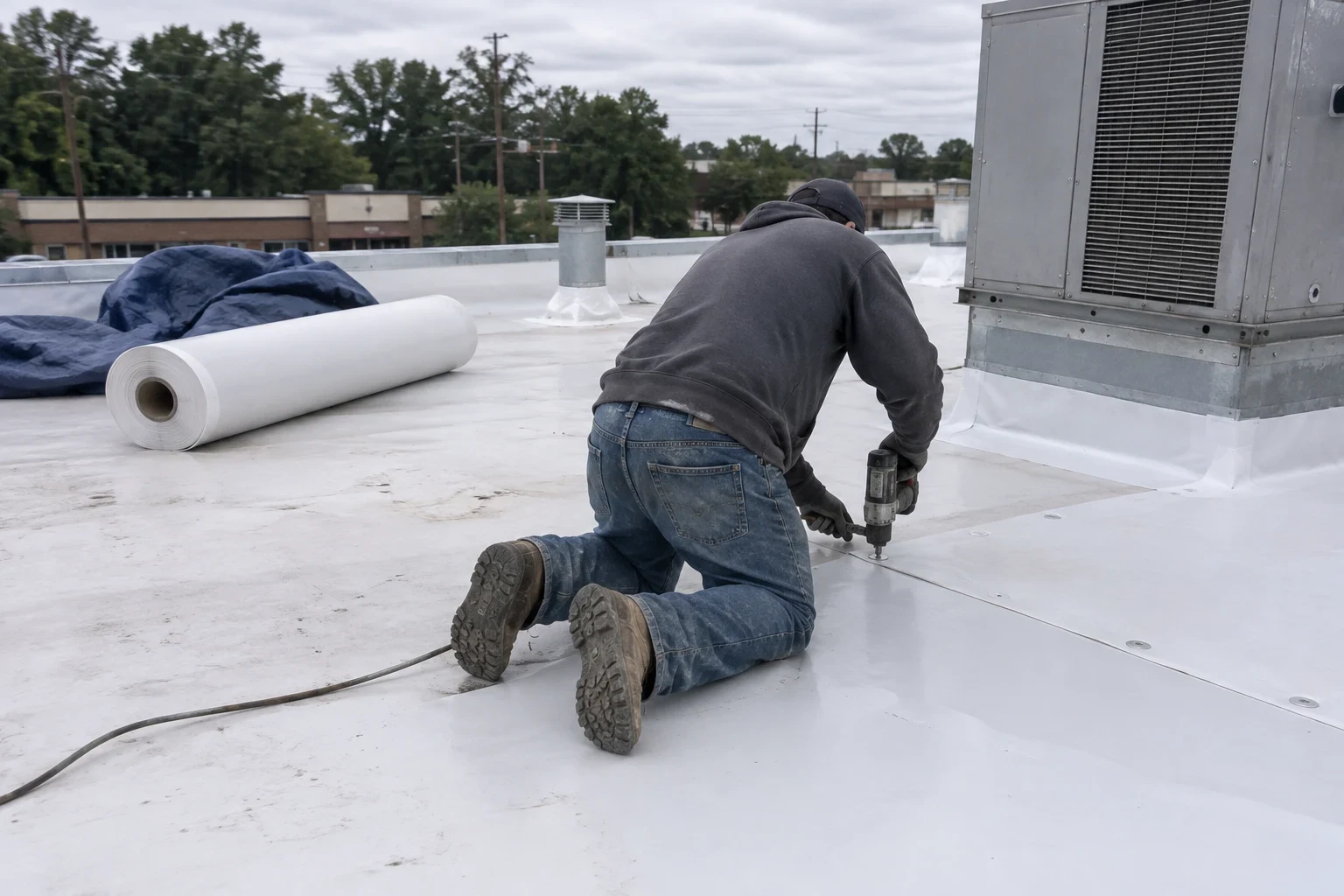
Storefronts, offices and churches with flat or low-slope roofs are the buildings we look after, from a single leaking seam to a full reroof. After a storm or a new ceiling stain, we climb up, photograph what we find and tell you which fixes can't wait and which can be planned for later.
Roofing for the building your business runs on
Flat and low-slope roofs don't fail the way pitched shingle roofs do. Rain drains slowly, so a small split seam or a blocked drain lets water sit and seep in for weeks before a ceiling tile shows it. By then, the insulation beneath the membrane is often already wet.
We track down where the water is getting in, stop it and show you where the roof stands overall so you can plan your budget. Plenty of buildings only need a focused repair, not a full replacement, and we'll say so when that's true.
After a hard storm, our first goals are a dry interior and good records of the damage, so your doors can stay open. If you decide to file a claim, we can join your adjuster meetings and help you with each step of the insurance claim process.
What our commercial roofing work covers
Membrane and seam repair
We patch punctures and reseal open seams on TPO, EPDM and modified bitumen roofs, using materials that bond properly with what's already there. A mismatched patch tends to peel within a season or two.
Flashing, curbs and penetrations
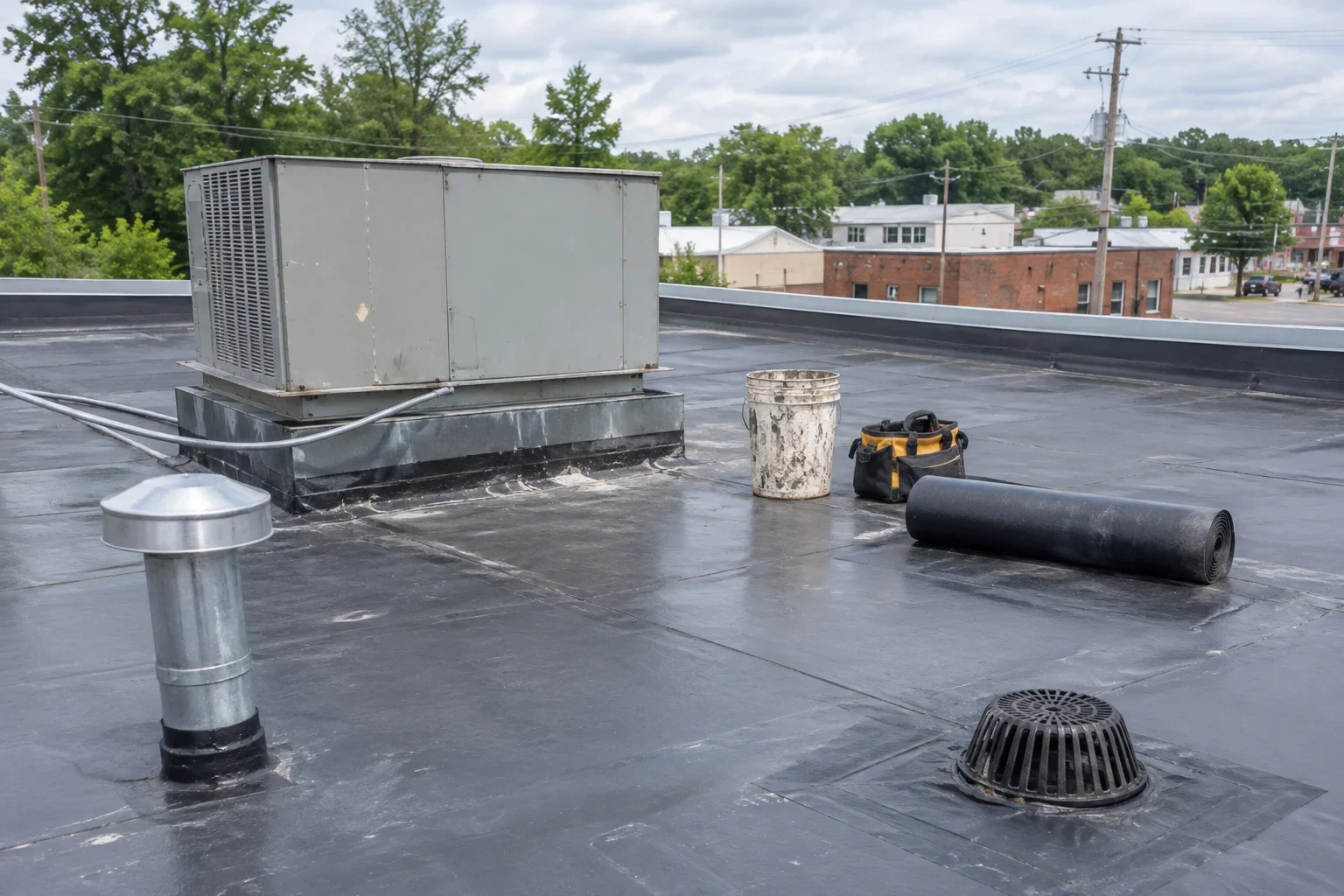
Most flat roof leaks start where something passes through the surface: HVAC curbs, vent pipes, skylights and the edges where the roof meets a parapet wall. We reflash and reseal these details because that is where water usually gets in.
Drains, scuppers and gutters
We clear and repair interior drains, scuppers, and the gutters and downspouts that carry water off the building. If water still stands on the roof two days after a rain, drainage needs attention.
Wet insulation and decking
We probe for soaked insulation and soft decking under the membrane and replace the damaged sections. New roofing laid over wet material traps moisture and fails early.
Reroofing when repairs stop making sense
When the roof is past patching, we either tear off or recover the existing system, depending on how many layers are already there and what code allows. Then we install a new membrane or metal roof sized to your building's drainage.
Signs your commercial roof needs attention
- Discolored or drooping ceiling tiles
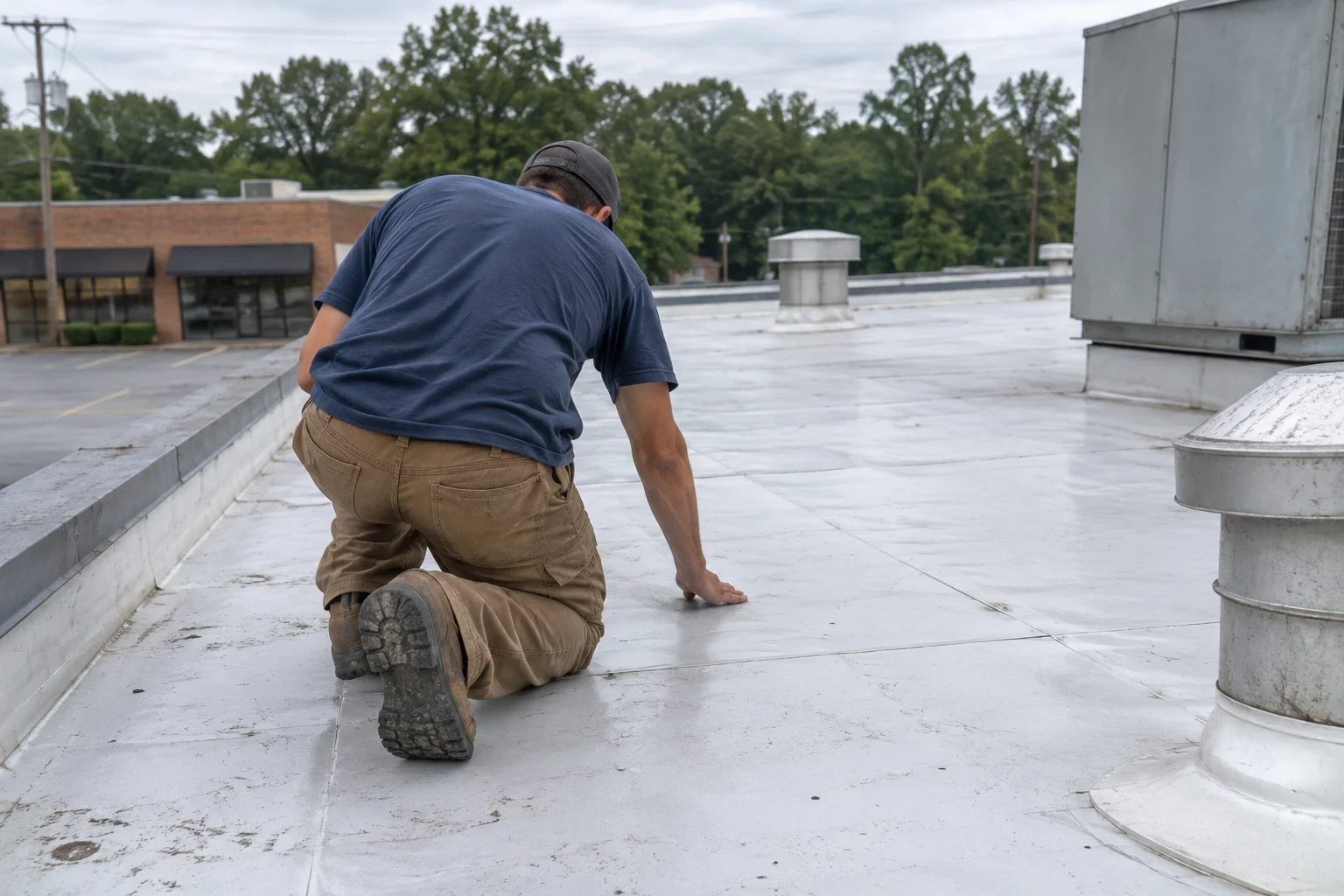
- A tan or brown stain overhead is usually the earliest warning you'll see indoors. The leak itself can sit well away from that spot, so we trace it from up on the roof.
- Puddles that won't dry up
- Standing water that sticks around for days adds load and wears seams faster. It typically means a low spot in the deck or a clogged drain.
- Bubbles, blisters or a cracked top layer
- Blisters show trapped air or moisture between layers. Cracks and a crazed, alligator-like surface mean years of sun have worn it out.
- Lifting edge metal or split seams
- If edge flashing rattles in a breeze or a seam peels up under your fingertip, the next heavy rain will find its way in.
- Hail or high wind recently
- Summer storms and leftover tropical weather can loosen edges and bruise membranes with little visible sign. Checking soon afterward gives you photos to support a claim.
What to expect from start to finish
- 1
Start with a quick call
Let us know what you've noticed, where the building sits and how we reach the roof. We'll set a free inspection at a time that fits your business hours.
- 2
Inspection and photos
We look over the membrane, seams, flashing, drains and equipment curbs, then check the interior where leaks appear. Our photo report of findings shows you the same things we saw up top.
- 3
Written plan and estimate
We lay out whether a repair or a new roof is the better choice and explain our reasoning, with each item priced separately. When a claim is involved, we can be on the roof with your adjuster.
- 4
Work planned around your day
We time loud tasks and deliveries to keep disruption low, leave doors and sidewalks open and protect the ground around the building. At the end of each day we haul off debris and run a magnet across the lot for stray nails and screws.
- 5
Walkthrough before we leave
We tour the finished roof with you and, where possible, send water toward the drains so you can watch it flow off.
What moves the price of a commercial roof
We price each building separately, and only after we've walked the roof ourselves. Most of the difference between two jobs comes from hidden damage below the membrane and how much of the surface needs work. Every line goes on paper before we start, so the number you approve is the number you plan around.
- Square footage and shape
- Bigger roofs cost more, but parapet walls, stepped levels and awkward corners also add flashing and hours.
- Type of membrane or metal
- TPO, EPDM, modified bitumen and metal differ in material and labor costs. On a repair, matching what's already up there shapes the price too.
- What's under the surface
- Soaked insulation and rotted decking must come out before new roofing goes on. Core samples tell us how much before any work begins.
- Rooftop equipment and reach
- Every HVAC unit, vent and skylight means more detail work. How tall the building is and whether materials go up by ladder, hatch or lift also counts.
- Removal and permit work
- Stripping old layers costs more than covering them, yet code caps how many layers a roof may hold. We build permit and inspection steps into the plan from day one.
Questions about commercial roofing
- Do we have to close while you work on the roof?
- Usually not. Nearly all of the work happens up top, and we time the noisiest tasks and deliveries away from your peak hours. If any space inside needs covering during a repair, we'll let you know beforehand so you can move inventory or equipment.
- Can you help with an insurance claim after storm damage?
- Yes. We photograph the damage, can be there when your adjuster inspects the roof and help you work through the claim from start to finish. Your insurer and adjuster decide what's covered, but you'll go in with solid proof of what the storm left behind.
- How do we decide between repairing and replacing?
- The main questions are how much insulation is wet, how old the membrane is and how spread out the trouble spots are. A handful of failed seams on an otherwise healthy roof calls for a repair. Blistering across the surface, soaked insulation or new leaks every year usually means it's time for a new roof, and our photos show you why.
- Which commercial roof systems do you work on?
- Flat and low-slope roofs on existing commercial buildings, covering TPO, EPDM, modified bitumen and metal. We serve buildings in Spout Springs, Sanford, Lillington and Fayetteville.
- How often should someone look at a commercial roof?
- Plan on two visits a year, one in spring and one in fall, with an extra check after any big storm. Catching a blocked drain or a loose seam on a routine visit costs much less than tracking down a leak once it reaches the inside.
Find out what your roof is hiding
Describe what you've spotted and we'll schedule a free inspection. Afterward you'll have photos of every problem area and an honest recommendation on patching versus a new roof.