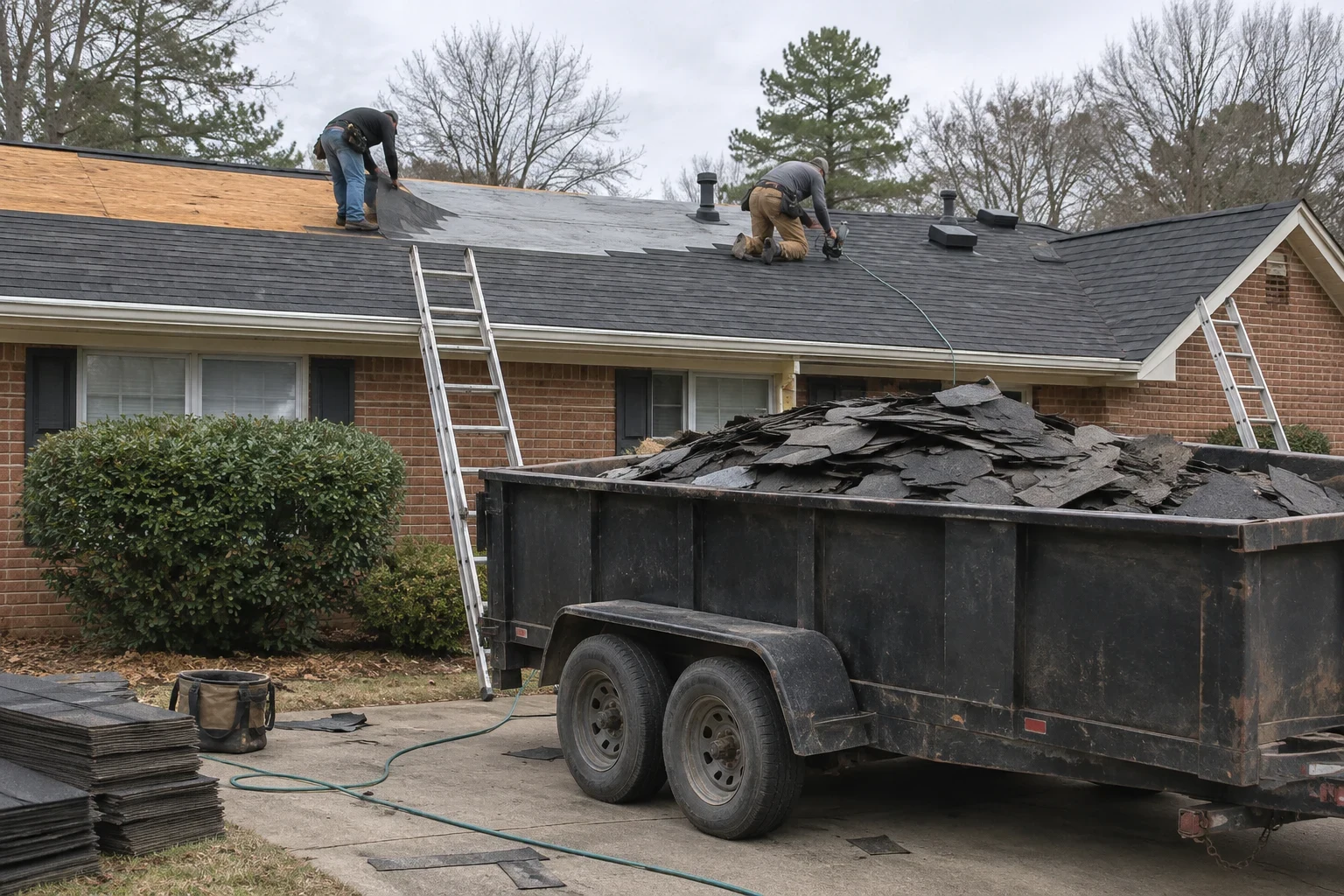
ServicesRoof Repair
Roof Repair in Spout Springs
Water spots on a ceiling or a few shingles blown into the grass can often be fixed without replacing the whole roof. We track down where the trouble starts, send you photos of what we see and repair it so the rest of your roof stays sound.
When a Repair Is the Right Call
Most roofs fail in small places first. A pipe boot cracks in the sun, a strip of flashing pulls loose at a chimney or a few shingles lift after a gusty thunderstorm. Caught early, those problems are usually a straightforward repair, and your home stays dry without the cost of a full tear-off.
We start by finding where the water is actually getting in, which is often a few feet from where the stain shows up inside. Then we tell you plainly whether a repair makes sense. If the roof has years left, we fix it. If the shingles are brittle and failing across whole slopes, we'll say so and explain the option of roof replacement, with photos so you can judge for yourself.
What Our Roof Repair Covers
- Finding the real leak
- We check both the attic and the roof surface to trace water back to where it actually enters. A patch in the wrong place only moves the stain.
- Replacing damaged shingles
- Missing, creased or cracked shingles come out and new ones go in, chosen to match the color and profile of your roof as closely as we can. We also reseal any loose tabs so wind has nothing to grab.
- Flashing and vent boots
- Leaks most often begin where the roof meets something else: a chimney, a sidewall, a skylight or a plumbing pipe. We refit or renew tired metal flashing there and replace rubber pipe boots that have cracked.
- Patching soft decking
- When water has weakened the plywood beneath the shingles, we remove the damaged piece and fasten in new decking before closing the roof back up.
- Ridge caps and roof vents
- Split ridge caps and loose vents give wind-driven rain an easy way in. We replace or re-secure them so they shed water the way they should.
When It's Time to Call About a Repair
Stains on ceilings or walls
A yellow or brown ring on the drywall is usually a sign water has been sneaking in for some time. Tracing it early can save you from replacing soaked insulation and sheetrock.
Pieces of shingle in the yard
Losing even a handful leaves the underlayment open to rain and sun. That thin layer was never meant to carry the load on its own for long.
Grit collecting in gutters
A buildup of granules in the gutters or at the bottom of a downspout means shingles are wearing down. It may be limited to one slope or spread across the whole roof.
Moisture in the attic
Damp insulation, darkened rafters or a sliver of daylight around a vent pipe are early clues. Catching them now keeps the water from reaching your living space.
Shingles lifting or curling
Corners that turn up, or tabs that flap whenever the wind blows, mean the seal underneath has failed. A strong summer storm around Spout Springs is usually what finds those spots first.
How We Arrive at Your Repair Estimate
No two repairs cost the same, so we don't guess at a number over the phone before anyone has looked at your roof. Once we've seen the damage up close, you get an estimate with every item broken out on its own line. If the total runs higher than you expected, financing is available through Acorn Finance.
Condition of the decking
Replacing a few shingles on solid plywood is a smaller job than cutting out soft, water-damaged boards first. Rot often stays hidden until the old shingles are lifted. If we uncover it, we photograph it and talk with you before going further.
Pitch and height of the roof
A steep slope or a two-story roofline calls for more safety gear and slower, more careful work, which adds labor time.
Your shingle style
Three-tab, architectural and older discontinued colors each carry a different material cost. They also affect how closely new pieces will blend with the old.
Location of the damage
Out in the open middle of a slope, swapping shingles goes quickly. Around a chimney, skylight or the spot where a roof meets a wall, the detail work takes longer.
How a Repair Visit Works
- 1
Start with a phone call
Let us know what you've noticed and roughly when it began. We'll set a convenient time to come out and inspect the roof for free.
- 2
We inspect and take photos
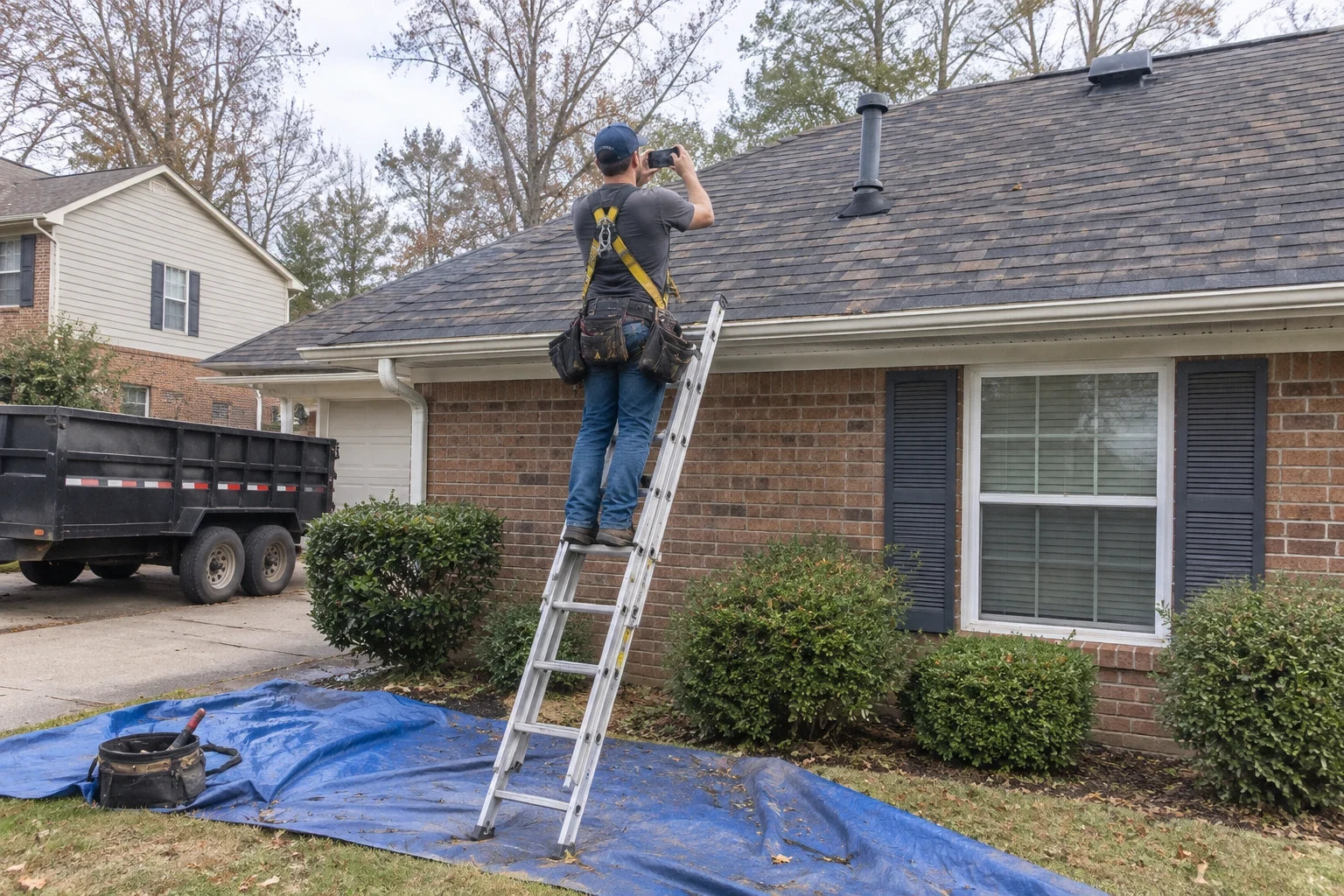
We look over the shingles, flashing and, where it's accessible, the attic. Afterward you receive a photo report showing what's damaged, where it is and what we suggest doing about it.
- 3
You get a line-by-line estimate
Each repair is listed separately so nothing is lumped together or vague. We don't begin any work until you've said yes.
- 4
Repair day and cleanup
We protect your plants, beds and walkways before starting, then make the repair. When we're done, we sweep the yard and driveway with a magnet to collect stray nails and send you photos of the finished work before we leave.
Common Questions About Roof Repair
How can I tell whether I need a repair or a new roof?
Look past the damaged area to the rest of the roof. Shingles that still bend without cracking and keep most of their granules usually mean a repair is the sensible move. When whole slopes are brittle or curling, or leaks keep showing up in different rooms, patching rarely ends. Our photo report lets you see the same things we saw, and the choice is yours.
Will the new shingles match the old ones?
We identify the brand and style already on your roof and source the nearest match we can find. If your shingles are discontinued or heavily weathered, the new ones may look a shade different at first. We'll tell you before the work starts if we think the difference will be noticeable.
Does homeowners insurance cover roof repair?
Coverage usually hinges on the cause. Sudden events like high wind, hail or a tree branch coming down tend to be covered, while normal aging generally is not. When the damage looks storm related, we can meet your adjuster at the house and help you through the claim from start to finish. You'll find more on our Storm Damage Repair page.
What can I do about a leak before you arrive?
Put a bucket or pan under the drip and move anything valuable out of the way. If the ceiling is sagging with trapped water, poking a small hole in the lowest point lets it drain into the bucket rather than spread across the drywall. Please don't climb onto the roof yourself; leave that part to us.
Do you handle repairs outside Spout Springs?
We do. Our crews regularly work in Anderson Creek, Spring Lake, Lillington and Sanford, among other nearby towns. The Service Areas page has the full list.

Find Out What's Really Going On Up There
A small leak is easier and cheaper to fix this week than next season. We'll inspect your roof at no charge and send you photos of exactly what we found.