ServicesSiding
Siding Repair and Replacement in Spout Springs
When wind peels back a panel or hail leaves cracks along one side of your home, we come out, photograph the damage and tell you plainly whether a repair will hold or a wall needs new siding. Then we fix it and keep water out of the walls.
Siding protects more than looks
Your siding is the rain jacket for the framing and insulation behind it. A single loose or split panel lets wind-driven rain reach the house wrap and the wood sheathing, and that kind of moisture can sit unnoticed for months before it shows up as soft spots or a musty smell inside.
We work on the siding most homes around Spout Springs, Anderson Creek and Lillington were built with, mostly vinyl with some fiber cement and engineered wood. After a storm, our first job is to find out what actually broke and what is only cosmetic, so you are not talked into more siding than you need.
If the same storm hit your roof or gutters, we can look at those during the same visit and put it all in one report.
What our siding work covers
Panel repair and replacement
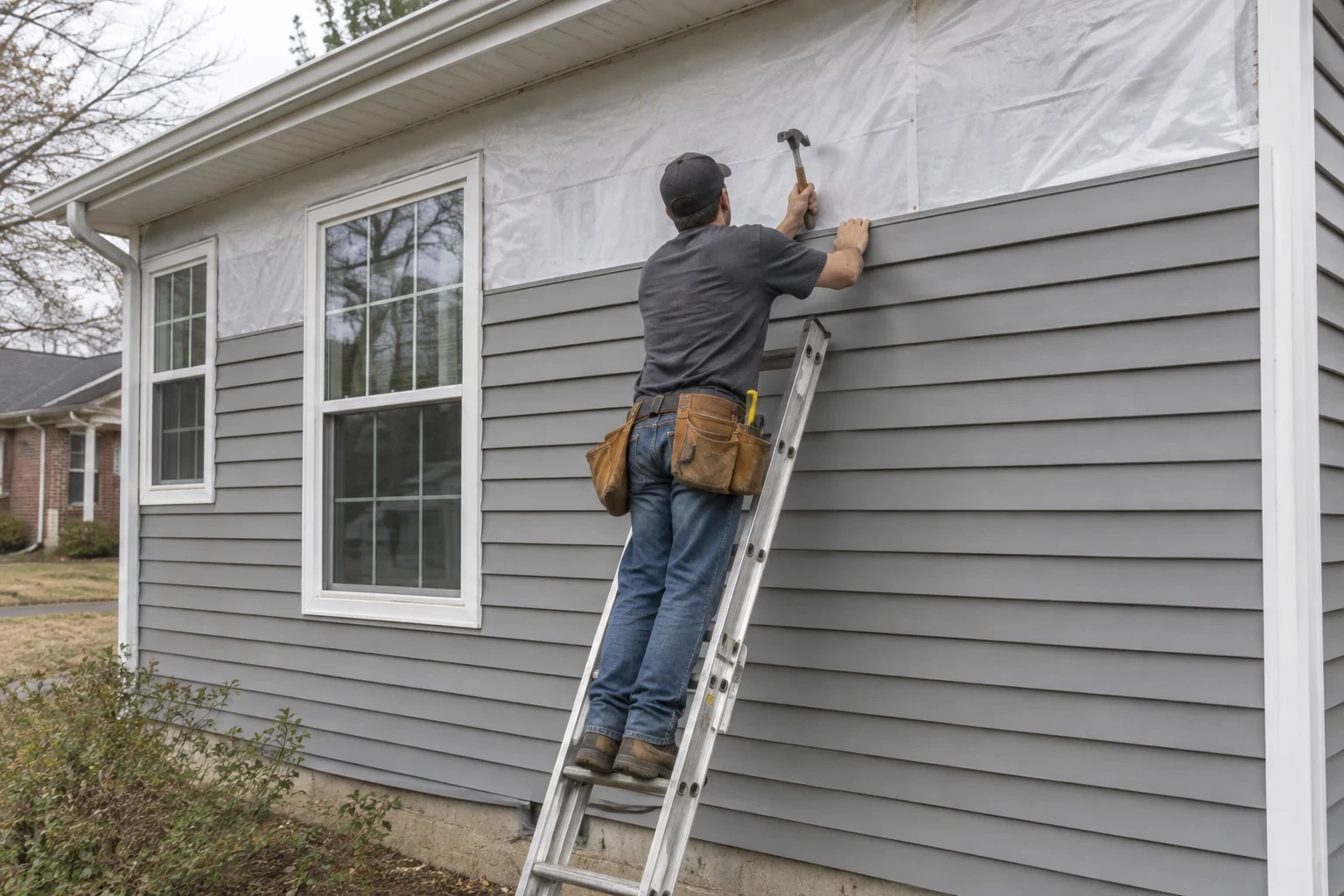
We unlock and swap cracked, holed or warped vinyl panels without tearing apart the wall around them. For fiber cement or engineered wood, we cut out damaged boards and fit new ones to the existing course lines.
Full wall or whole-house siding
When damage is widespread or the old siding is brittle, we replace it wall by wall. That includes new starter strip, corner posts and J-channel so the new panels hang straight and drain the way they should.
House wrap and flashing checks
With the siding off, we look at the weather barrier underneath. Torn wrap gets patched or replaced, and we make sure flashing at roof-to-wall joints sends water out instead of in.
Color and profile matching
We track down the closest available match for your panel style and color. If a true match no longer exists, we tell you before any work starts and talk through options, such as moving original panels to the front and using new ones on a less visible side.
Storm documentation
Every visit ends with dated photos of the damage, marked by wall, so you have clear records whether or not you file a claim.
Signs your siding needs attention
- Panels flapping or missing
- Wind gets under a loose edge and works it free. One missing piece leaves the wall behind it open to the next rain.
- Cracks, dents or small holes
- Hail and flying debris leave chips and punctures that are easy to miss from the yard. Cold weather makes older vinyl brittle, so a storm in winter can crack panels that would have flexed in July.
- Warping or buckling
- Panels nailed too tight can bow in summer heat. Wavy lines across a wall usually mean the panels cannot expand and need to be reset.
- Damage where a limb fell
- A falling branch can crack siding and also bend the gutter or scrape shingles above it. That spot is worth a closer look even if it seems minor.
- Stains, mildew or soft spots inside
- Water marks on interior walls, peeling drywall tape or a soft feel near the baseboard can point to moisture getting past the siding.
How a siding job runs
- 1
A quick phone conversation first
Give us a rough idea of which walls look damaged and the day the storm hit. We pick a time that works for you to come walk around your home, and we can check the roof and gutters on the same trip if you'd like.
- 2
Inspection and photo report
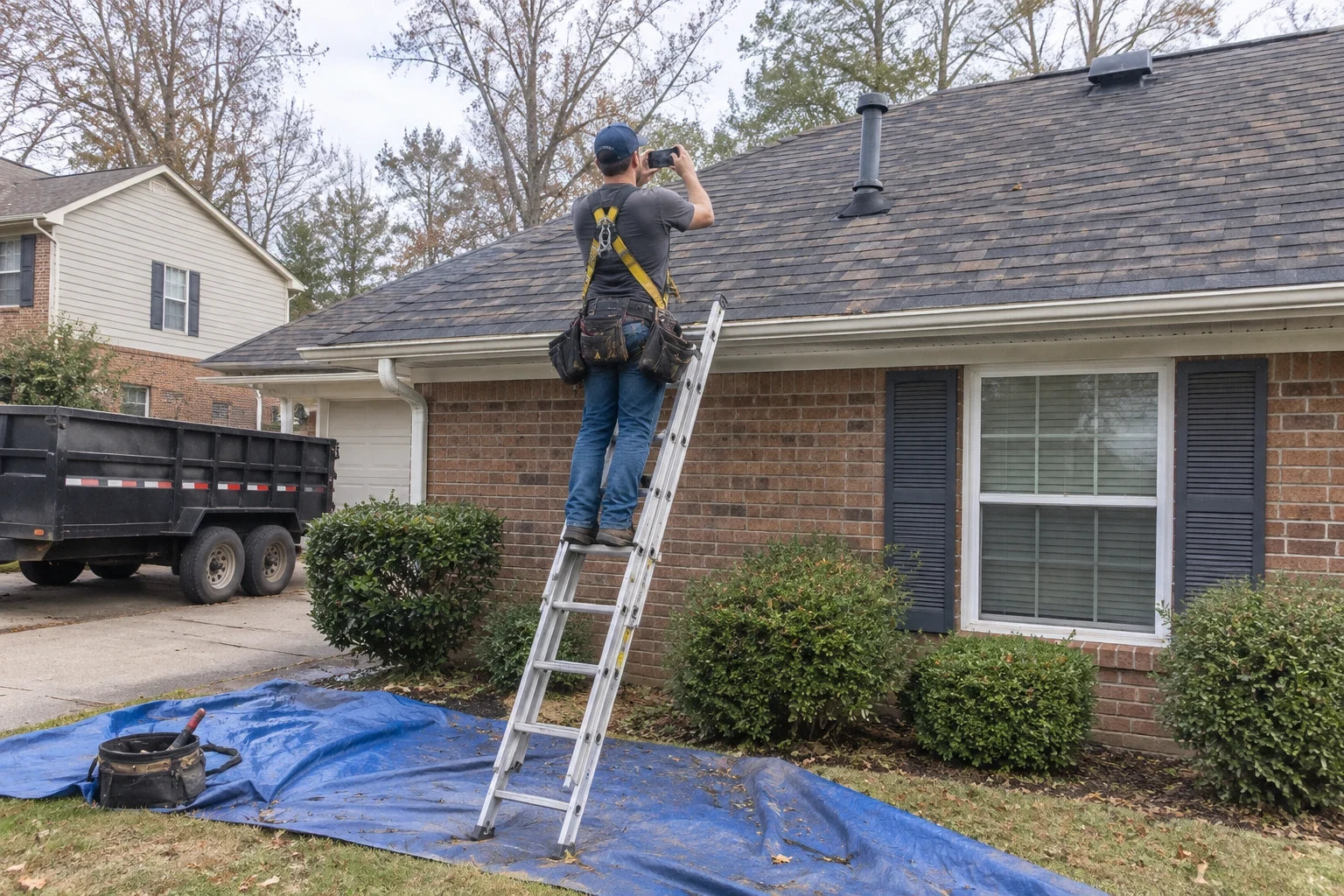
We check each wall, lift a few panels where needed and photograph what we find. You get a free report showing the damage and our honest take on repair versus replacement.
- 3
Written estimate and claim help
Our estimate lists materials and labor line by line. When an insurance claim is part of the picture, we are glad to be there for the adjuster's visit and show them each damaged spot in our photos. Whether it is covered is still your insurer's decision.
- 4
Work day and cleanup
We protect plants and walkways near the walls, remove damaged siding, check the wrap and hang the new panels. Before we leave, we pick up scraps and run a magnet over the yard for nails, then walk the finished walls with you.
What affects the cost of siding work
Swapping a handful of cracked panels takes a fraction of the time and material that residing a whole wall does. That is why we look at your home before putting a number on anything. Your estimate breaks out each line, and if pulling the old siding reveals something new, we show you and talk it over before we touch it.
- How much is damaged
- Spot repairs on one wall cost far less than residing several sides. Square footage drives most of the price.
- Siding material
- Vinyl is the quickest to repair. Fiber cement and engineered wood take more cutting and handling, which adds labor.
- What we find underneath
- Wet sheathing or torn house wrap has to be fixed before new siding goes on. We photograph it and show you before replacing anything.
- Matching and access
- Discontinued colors may mean replacing a full wall for a consistent look. Two-story walls, steep yards or tight side setbacks need ladders or staging that take more time.
Siding questions we hear often
- Will my insurance pay for storm-damaged siding?
- Often it does when the damage clearly came from wind, hail or a falling limb, but it depends on your policy. We give you dated photos and can meet with your adjuster to point out what we found. Your insurer makes the final call on coverage.
- Can you match my existing siding?
- Usually we can find the same profile and a close color. Sun fades vinyl over the years, so even an exact match may look slightly different at first. If we cannot get a good match, we tell you during the estimate, not after the panels are up.
- Do I need to replace all my siding or just the damaged part?
- Most storm damage can be repaired panel by panel. We recommend a full wall or more only when the old siding is brittle, the damage is spread out or a match is not available. Our photo report shows why.
- Do you offer financing for siding?
- Yes, financing is available through Acorn Finance. Once you have your estimate in hand, ask us and we will walk you through the basics so you can decide if it fits your budget.
- Can you check my roof while you are looking at the siding?
- Yes, and after a storm we suggest it. The same wind and hail that hit your walls often loosen shingles or bend gutters, and a free roof inspection can be part of the same visit.
Find out what the storm really did
We will walk around your home, photograph every damaged spot and tell you straight whether it needs a repair or new siding. You decide what happens next.